MessagePad 2100
Newton MessagePad Specs History
Horizontal Scroll: Shift + Mouse Wheel
Updated: 2026/08/20
Device Count: 8
Search devices...CtrlK
Diff
Diff Only
Compare
Fullscreen
Zoom
Dark Mode
中文站点
| Model | Basic | Display | Connectivity | Power | Other | ||||
|---|---|---|---|---|---|---|---|---|---|
Basic Info | Chip / Memory / GPU | Screen Details | Ports | Input Method | Battery | Size & Weight | Description | Model Numbers | |
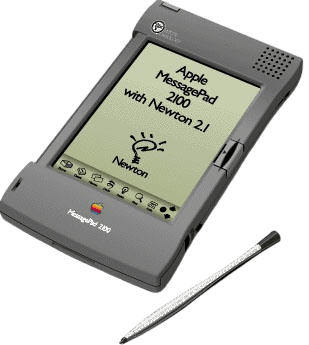 Preview Preview | Release Date 1997.11 OS Support Newton OS 2.1 (English, German) Color | 1-Core StrongARM SA StrongARM SA-110 Graphics: Built-in graphics RAM: Built-in 8 MB (4 MB DRAM, 4 MB Flash) Storage: Built-in 8 MB ROM | 4.9-inch x 3.3-inch low-power transreflective LCD with backlight Grayscale LCD (16-level grayscale) Resolution: 480 x 320 PPI: 100 | Serial port: 1 Newton InterConnect port: 1 Infrared: 1 (dual-mode, up to 115 Kbit/s IrDA, 38.4 Kbit/s ASK, up to 1m distance) Audio input: Built-in microphone x 1 Audio output: Built-in speaker x 1 Expansion slot: Two Type II PC Card slots (3.5 V and 5 V cards) | MessagePad 2100 stylus | 4 AA batteries or optional NiMH rechargeable battery pack, or external power | Height: 210.3mm Width: 118.7mm Thickness: 27.5mm Weight: 0.64 kg | The Newton MessagePad 2000 was a complete mobile computer featuring a variety of software like a web browser, email client, word processor, fax software, calendar, and address book, and could even record up to an hour of voice on a 4 MB memory card. However, its main advantage over its predecessor (the MP 130) was the brand-new processor. The 162 MHz StrongARM processor significantly sped up all operations on the MessagePad 2000. It was later re-released as the MessagePad 2100, which became the first Newton to feature an Ethernet card. | H0149 H0244Z/A |
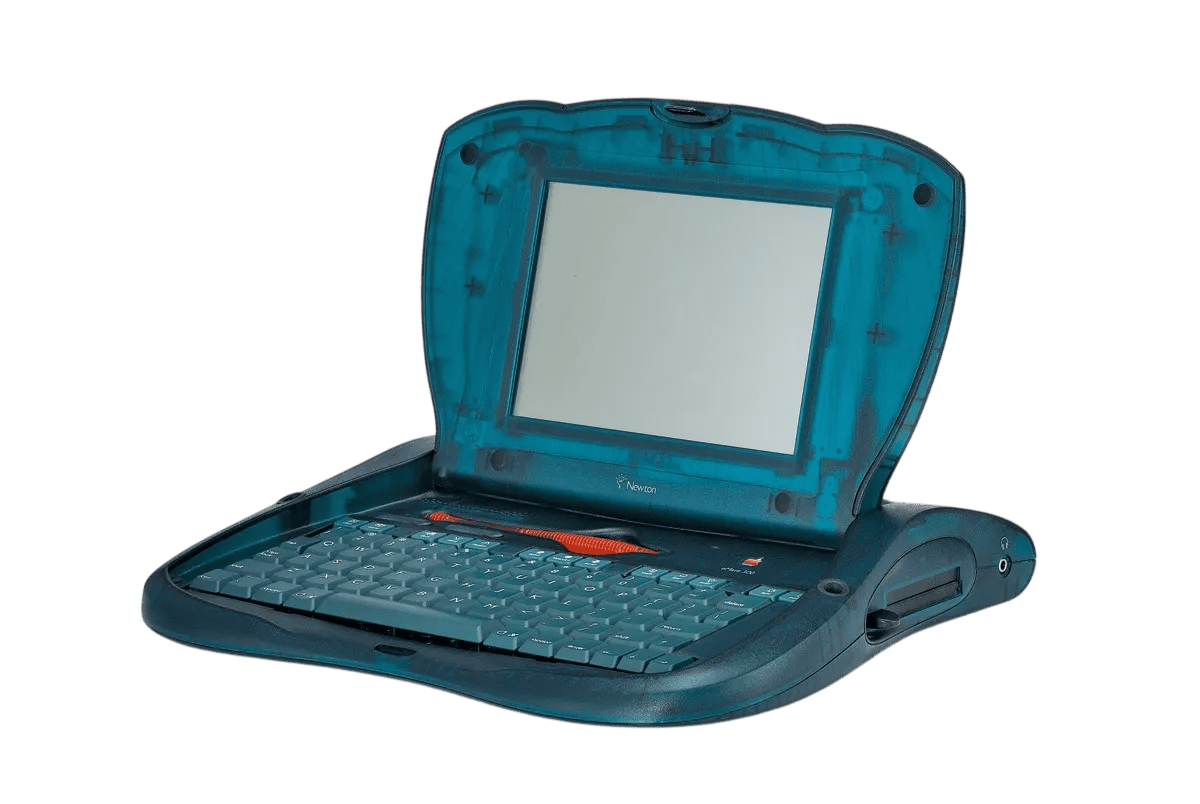 Preview PrevieweMate 300 | Release Date 1997.03 OS Support Newton OS 2.1(English) Color | 1-Core ARM ARM 710a Graphics: Built-in graphics RAM: Built-in 3 MB (1 MB DRAM, 2 MB Flash) Storage: Built-in 8 MB ROM | Approx. 6.8-inch grayscale LCD with backlight Grayscale LCD (16-level grayscale) Resolution: 480 x 320 | Serial port: 1 Newton InterConnect port: 1 Infrared: 1 (115 Kbit/s, up to 1m distance) Audio input: One 3.5 mm analog input jack Audio output: One 3.5 mm analog output jack, built-in speaker x 1 Expansion slot: One PCMCIA Type II/III slot | eMate stylus, built-in keyboard (76-key US or 77-key ISO) | NiMH rechargeable battery pack or external power | Height: 304.8mm Width: 289.6mm Thickness: 53.3mm Weight: 1.81 kg | The eMate 300 was a personal digital assistant designed for the education market, serving as a low-cost laptop running the Newton OS. It was the only Newton device with a built-in keyboard. Launched on March 7, 1997, at $799, it was discontinued on February 27, 1998, along with the rest of the Newton product line and operating system. The keyboard was approximately 85% of standard full size. Power came from built-in rechargeable batteries, offering up to 28 hours on a full charge. To achieve its low price point, the eMate 300 lacked some features of its contemporary Newton equivalent, the MessagePad 2000. It used a 25 MHz ARM 710a RISC processor with less memory, while the MessagePad 2000 used the StrongARM 110 RISC processor and was more expandable. Unlike the MessagePad series, the eMate 300 featured an internal memory expansion slot. Encased in a translucent green, durable shell, it was designed for heavy classroom use. The eMate 300 featured a dark green keyboard, similar to the PowerBook models of its time. | H0208 H0221LL/A |
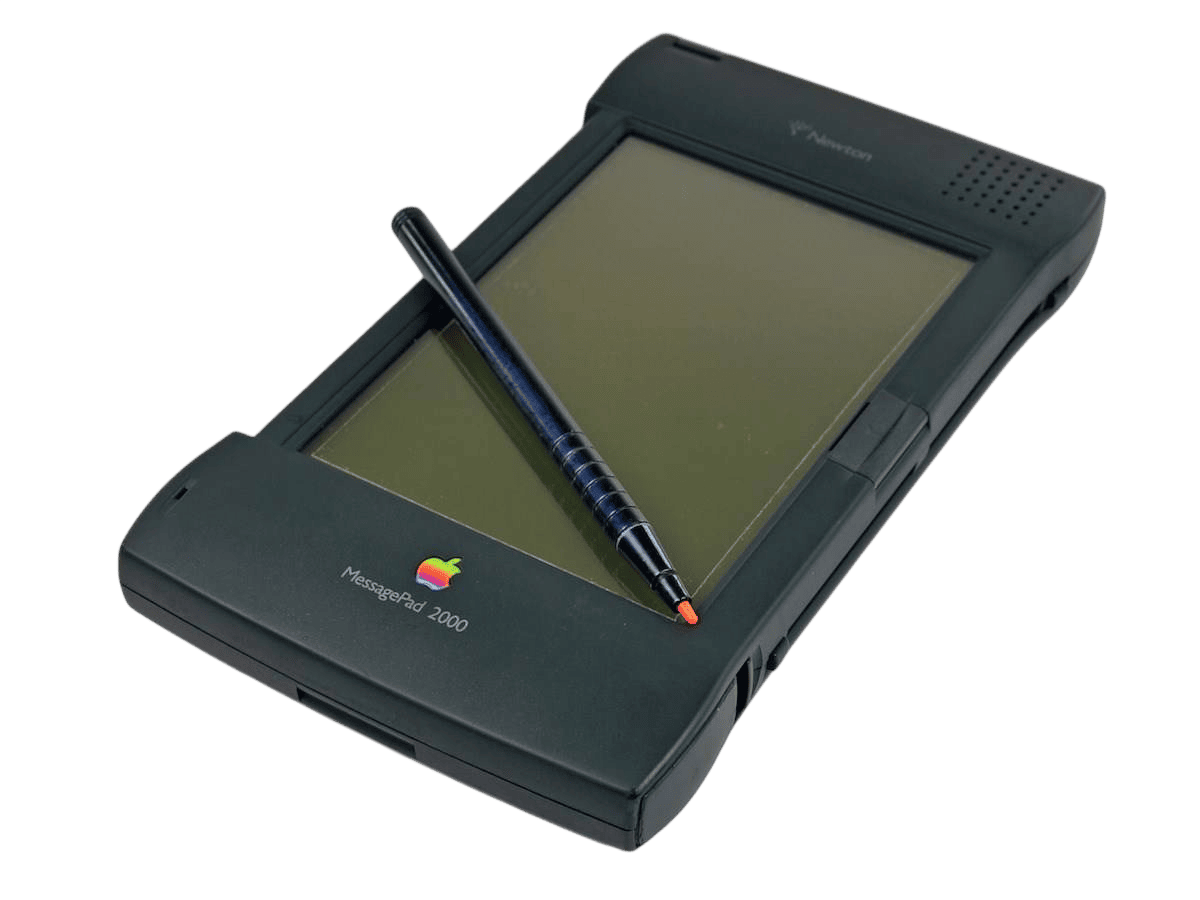 Preview PreviewMessagePad 2000 | Release Date 1997.03 OS Support Newton OS 2.1 (English, German) Color | 1-Core StrongARM SA StrongARM SA-110 Graphics: Built-in graphics RAM: Built-in 5 MB (1 MB DRAM, 4 MB Flash) Storage: Built-in 8 MB ROM | 4.9-inch x 3.3-inch low-power transreflective LCD with backlight Grayscale LCD (16-level grayscale) Resolution: 480 x 320 PPI: 100 | Serial port: 1 Newton InterConnect port: 1 Infrared: 1 (dual-mode, up to 115 Kbit/s IrDA, 38.4 Kbit/s ASK, up to 1m distance) Audio input: Built-in microphone x 1 Audio output: Built-in speaker x 1 Expansion slot: Two Type II PC Card slots (3.5 V and 5 V cards) | MessagePad 2000 stylus | 4 AA batteries or optional NiMH rechargeable battery pack, or external power | Height: 210.3mm Width: 118.7mm Thickness: 27.5mm Weight: 0.64 kg | The Newton MessagePad 2000 was a complete mobile computer featuring a variety of software like a web browser, email client, word processor, fax software, calendar, and address book, and could even record up to an hour of voice on a 4 MB memory card. However, its main advantage over its predecessor (the MP 130) was the brand-new processor. The 162 MHz StrongARM processor significantly sped up all operations on the MessagePad 2000. It was later re-released as the MessagePad 2100, which became the first Newton to feature an Ethernet card. | H0149 H0226LL/A H0136Z/A H0225LL/A |
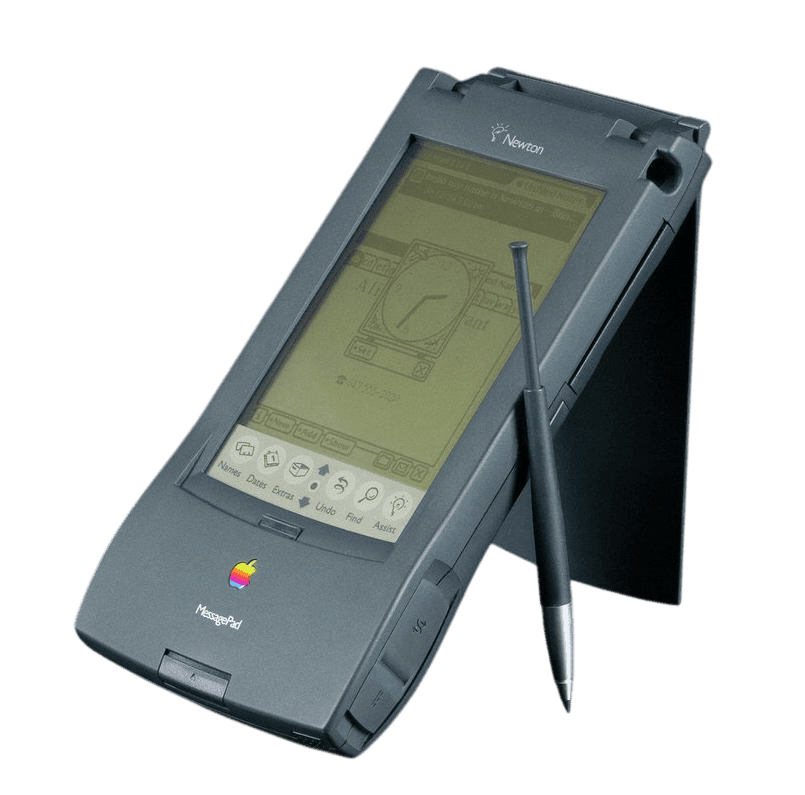 Preview PreviewMessagePad 130 | Release Date 1996.04 OS Support Newton OS 2.0(English,German) Color | 1-Core ARM ARM 610 Graphics: Built-in graphics RAM: Built-in 2.5 MB Storage: Built-in 8 MB ROM | 3.8-inch x 2.8-inch low-power transreflective LCD with backlight Monochrome LCD (1-bit black & white) Resolution: 320 x 240 | Serial port: 1 (LocalTalk and RS-232 compatible) Infrared: 1 (low-power, half-duplex, up to 38.4 Kbit/s, up to 1m distance) Expansion slot: One PC Card Type II slot (325 mA capacity) | Telescoping stylus | 4 AA batteries or NiCd rechargeable battery pack, or external power | Height: 203.2mm Width: 101.6mm Thickness: 30.5mm Weight: 0.45 kg | It took Apple more than a year to upgrade the original Newton. This was mainly because the Newton team had been working hard for over six years, and morale was low following devastating media reviews of the original MessagePad. The first revisions were the Newton MessagePad 100 and 110. The MP 100 was essentially the original MessagePad with new ROM, while the MP 110 featured a completely new design with a smaller screen and longer battery life. The MessagePad 130 was released in early 1996 at the CeBIT trade show in Germany, featuring an optional backlit display for improved readability. | H0196 H0188LL/A |
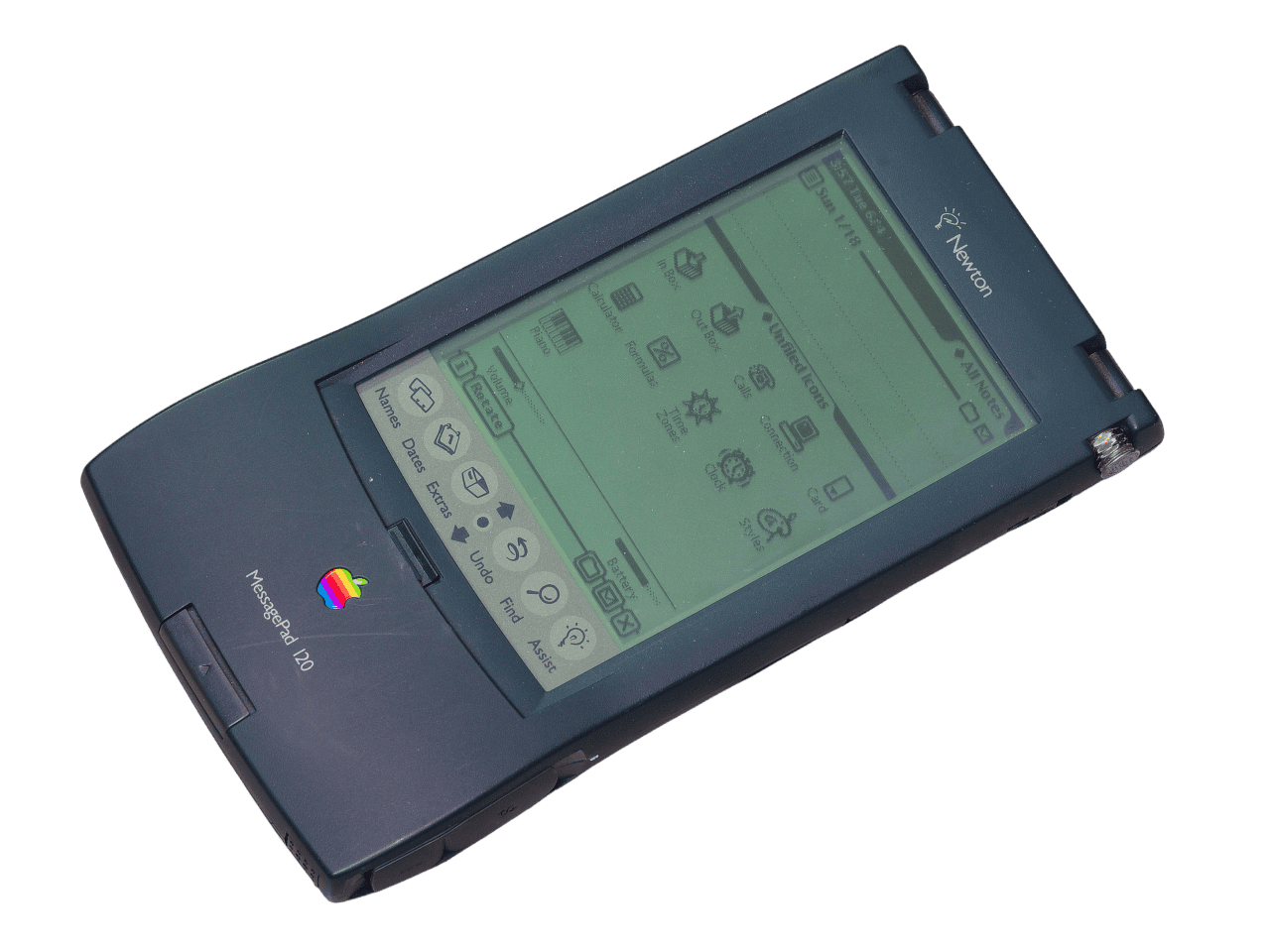 Preview PreviewMessagePad 120 | Release Date 1995.01 OS Support Newton OS 1.3 (English, German, French) or Newton OS 2.0 (English, German) Color | 1-Core ARM ARM 610 Graphics: Built-in graphics RAM: Built-in 1 MB or 2 MB Storage: Built-in 4 MB (Newton OS 1.3) or 8 MB (Newton OS 2.0) ROM | 3.8-inch x 2.8-inch low-power reflective LCD Monochrome LCD (1-bit black & white) Resolution: 320 x 240 | Serial port: 1 (LocalTalk and RS-232 compatible) Infrared: 1 (low-power, half-duplex, up to 38.4 Kbps) Expansion slot: One PCMCIA Type II slot | Telescoping stylus | 4 AA batteries or NiCd rechargeable battery pack, or external power | Height: 203.2mm Width: 101.6mm Thickness: 30.5mm Weight: 0.45 kg | It took Apple more than a year to upgrade the original Newton. This was mainly because the Newton team had been working hard for over six years, and morale was low following devastating media reviews of the original MessagePad. The first revisions were the Newton MessagePad 100 and 110. The MP 100 was essentially the original MessagePad with new ROM, while the MP 110 featured a completely new design with a smaller screen and longer battery life. The MessagePad 130 was released in early 1996 at the CeBIT trade show in Germany, featuring an optional backlit display for improved readability. | H0131 H0126LL/A H0142LL/A H0153LL/A |
MessagePad 110 | Release Date 1994.03 OS Support Newton OS 1.3 (English, German, French) Color | 1-Core ARM ARM 610 Graphics: Built-in graphics RAM: Built-in 1 MB Storage: Built-in 4 MB ROM | 3.8-inch x 2.8-inch low-power reflective LCD Monochrome LCD (1-bit black & white) Resolution: 320 x 240 | Serial port: 1 (LocalTalk compatible) Infrared: 1 (low-power, half-duplex, up to 38.4 Kbps) Expansion slot: One PCMCIA Type II slot | Telescoping stylus | 4 AA batteries or NiCd rechargeable battery pack, or external power | Height: 203.2mm Width: 101.6mm Thickness: 30.5mm Weight: 0.45 kg | It took Apple more than a year to upgrade the original Newton. This was mainly because the Newton team had been working hard for over six years, and morale was low following devastating media reviews of the original MessagePad. The first revisions were the Newton MessagePad 100 and 110. The MP 100 was essentially the original MessagePad with new ROM, while the MP 110 featured a completely new design with a smaller screen and longer battery life. The MessagePad 130 was released in early 1996 at the CeBIT trade show in Germany, featuring an optional backlit display for improved readability. | H0059 H0060LL/A |
MessagePad 100 | Release Date 1994.03 OS Support Newton OS 1.2 - 1.3(English、German) Color | 1-Core ARM ARM 610 Graphics: Built-in graphics RAM: Built-in 640 KB Storage: Built-in 4 MB ROM | Low-power reflective LCD Monochrome LCD (1-bit black & white) Resolution: 336 x 240 | Serial port: 1 (LocalTalk compatible) Infrared: 1 (low-power, half-duplex) Expansion slot: One PCMCIA Type II slot | Flat stylus | 4 AAA batteries or NiCd rechargeable battery pack, or external power | Height: 184.2mm Width: 114.3mm Thickness: 19.1mm Weight: 0.41 kg | It took Apple more than a year to upgrade the original Newton. This was mainly because the Newton team had been working hard for over six years, and morale was low following devastating media reviews of the original MessagePad. The first revisions were the Newton MessagePad 100 and 110. The MP 100 was essentially the original MessagePad with new ROM, while the MP 110 featured a completely new design with a smaller screen and longer battery life. The MessagePad 130 was released in early 1996 at the CeBIT trade show in Germany, featuring an optional backlit display for improved readability. | H1000 H0123LL/A |
MessagePad | Release Date 1993.08 OS Support Newton OS 1.0 - 1.1 Color | 1-Core ARM ARM 610 Graphics: Built-in graphics RAM: Built-in 640 KB Storage: Built-in 4 MB ROM | Low-power reflective LCD Monochrome LCD (1-bit black & white) Resolution: 336 x 240 | Serial port: 1 (LocalTalk compatible) Infrared: 1 (low-power, half-duplex) Expansion slot: One PCMCIA Type II slot | Flat stylus | 4 AAA batteries or NiCd rechargeable battery pack, or external power | Height: 184.2mm Width: 114.3mm Thickness: 19.1mm Weight: 0.41 kg | Apple spent more than six and a half years developing the first Newton MessagePad. When it finally launched, it featured impressive specs: a 20 MHz processor, a pressure-sensitive LCD display, a LocalTalk port, and an infrared transmitter. However, all these features were overshadowed by the Newton's handwriting recognition. It was Apple's pride and expectation was high, but its accuracy was far below the promised 95%. | H1000 |